History · Culture & Tradition · A2
Día de los Muertos: Memory, Not Mourning
Día de los Muertos: memoria, no luto
A2 · Foundations — present tense, everyday verbs, shorter sentences. The story made approachable.
En México hay una tradición muy especial. Se llama el Día de los Muertos. Es el primero y dos de noviembre.
Las familias mexicanas recuerdan a sus parientes muertos. Pero no es un día triste. Es un día de celebración y memoria.
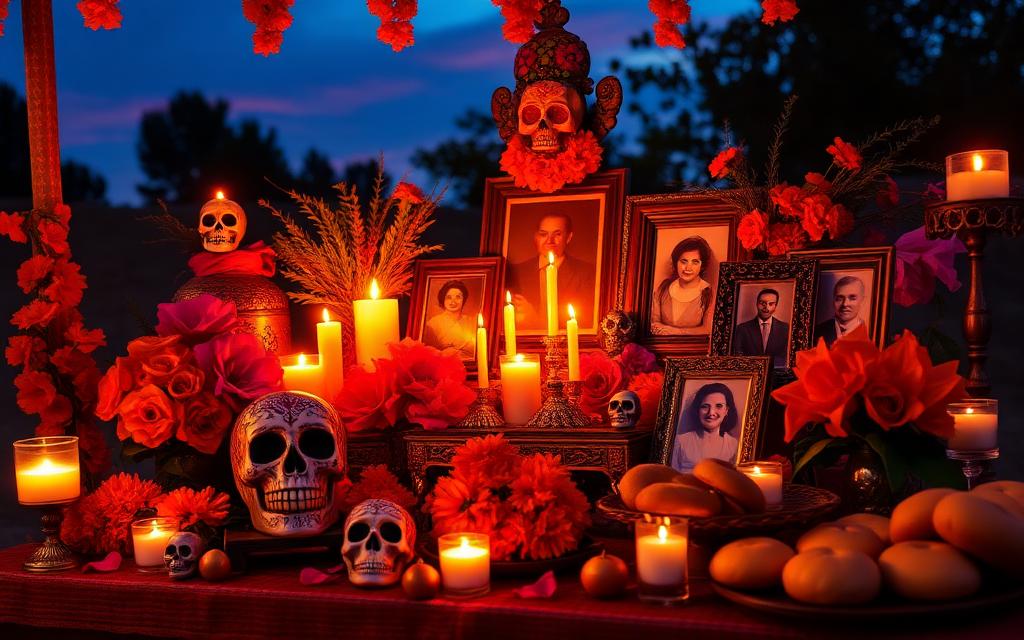
Las familias construyen un altar en casa. El altar se llama "ofrenda". En el altar ponen muchas cosas: fotografías de los muertos, flores amarillas (cempasúchil), velas, comida favorita y pan de muerto. El pan de muerto es un pan dulce con forma redonda.
También hacen calaveras de azúcar. Son blancas y de colores. No son tristes — son alegres y bonitas.
La tradición viene de los aztecas. Los aztecas creían que los muertos visitaban a los vivos. Hoy, las familias todavía creen lo mismo. La noche del primero de noviembre, los muertos vienen a casa.
En 2003, la UNESCO declaró el Día de los Muertos Patrimonio Cultural de la Humanidad.
English Translation
In Mexico there is a very special tradition. It is called the Day of the Dead. It is the first and second of November. Mexican families remember their dead relatives. But it is not a sad day. It is a day of celebration and memory. Families build an altar at home. The altar is called an "ofrenda". On the altar they put many things: photographs of the dead, yellow flowers (cempasúchil), candles, favorite food, and pan de muerto. Pan de muerto is a sweet bread with a round shape. They also make sugar skulls. They are white and colorful. They are not sad — they are cheerful and pretty. The tradition comes from the Aztecs. The Aztecs believed that the dead visited the living. Today, families still believe the same thing. On the night of November first, the dead come home. In 2003, UNESCO declared the Day of the Dead a Cultural Heritage of Humanity.
There are 40+ more stories like it.
Real history in Spanish at three levels (A2 / B1 / B2), with native audio, curated vocabulary, and a one-tap English toggle. Free to start — no card.
Know a Spanish teacher who'd use this?
This reading is fully open — no signup needed. Forward it to a colleague, drop it in a teacher group, or share it with a student who's curious.