History · Sport & Society · B1
Fútbol & National Identity in Latin America
El fútbol y la identidad nacional en América Latina
A2 · Foundations — present tense, everyday verbs, shorter sentences. The story made approachable.
El fútbol llegó a América del Sur a finales del siglo XIX. Marineros y empleados ingleses lo trajeron a los puertos de Buenos Aires, Río de Janeiro y Montevideo.
Al principio, era un deporte de la clase alta. Pero pronto, todos los niños jugaban al fútbol en las calles. No necesitaban mucho: solo una pelota y unos amigos.
En 1930, Uruguay ganó la primera Copa del Mundo. Fue un momento muy importante para América Latina. Después, Brasil y Argentina ganaron la Copa muchas veces.
Pelé, brasileño, es uno de los jugadores más famosos de la historia. Diego Maradona, argentino, también. En 2022, Lionel Messi ganó la Copa del Mundo con Argentina.
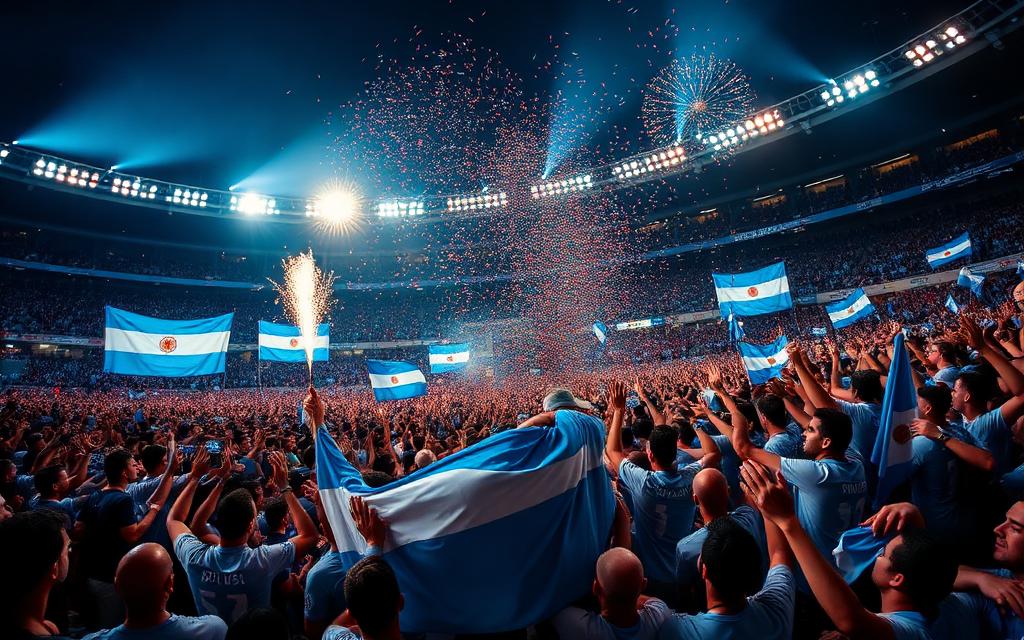
Para muchos países latinoamericanos, el fútbol no es solo un deporte. Es identidad nacional. Cuando juega la selección, todo el país para. Las familias se reúnen para ver los partidos. Es un momento de unión.
English Translation
Football arrived in South America at the end of the 19th century. English sailors and employees brought it to the ports of Buenos Aires, Río de Janeiro, and Montevideo. At first, it was an upper-class sport. But soon, all the children played football in the streets. They didn't need much: just a ball and some friends. In 1930, Uruguay won the first World Cup. It was a very important moment for Latin America. Afterwards, Brazil and Argentina won the Cup many times. Pelé, a Brazilian, is one of the most famous players in history. Diego Maradona, an Argentine, also. In 2022, Lionel Messi won the World Cup with Argentina. For many Latin American countries, football is not just a sport. It is national identity. When the national team plays, the whole country stops. Families gather to watch the games. It is a moment of unity.
There are 40+ more stories like it.
Real history in Spanish at three levels (A2 / B1 / B2), with native audio, curated vocabulary, and a one-tap English toggle. Free to start — no card.
Know a Spanish teacher who'd use this?
This reading is fully open — no signup needed. Forward it to a colleague, drop it in a teacher group, or share it with a student who's curious.